Southbound fund inflows hit new high, HK stock allocation heats up
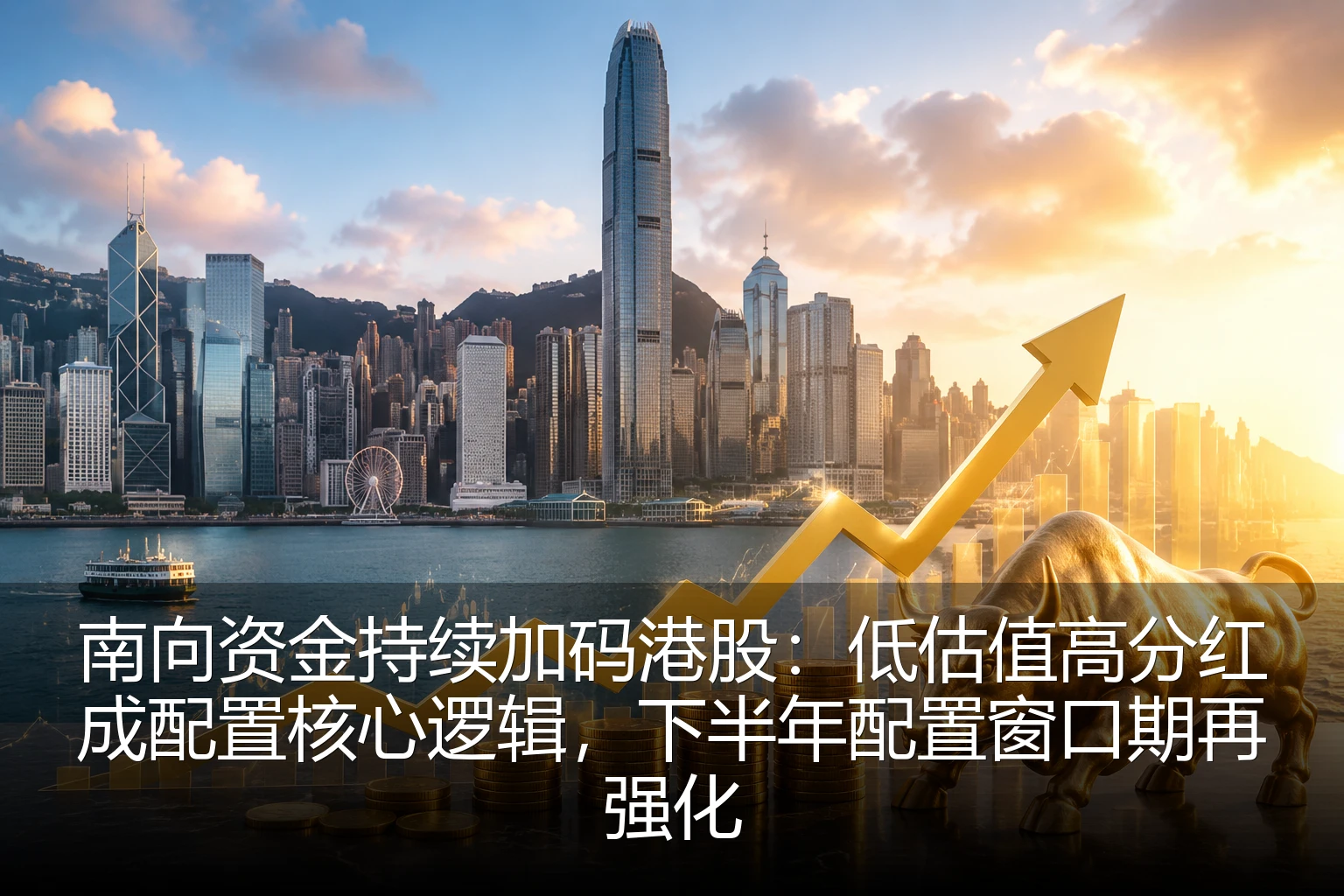
In August 2026, the HK stock market saw continuous heavy investment from Southbound funds. According to HKEX data, as of August 22, net inflows from Southbound funds in the first two weeks of August exceeded 18 billion HKD, with the highest weekly net inflow reaching 12 billion HKD, setting a new annual high. This data not only continued the trend of Southbound funds achieving over 100 billion net inflow for three consecutive months in July but also shows that mainland capital's enthusiasm for HK stocks is continuously increasing.
In terms of fund flows, Southbound funds mainly favor two major themes: 1) Technology growth sectors, including AI, semiconductors, and new energy vehicles; 2) High dividend sectors, such as finance, utilities, and consumer leaders. Tech giants like Tencent and Alibaba, as well as financial stocks like HSBC and Ping An, have become key investment targets. This trend is closely related to the current market environment—with the Fed's 85% probability of a September rate cut, the attractiveness of high-dividend assets increases under the expectation of global liquidity easing; simultaneously, the accelerated iteration of AI technology makes the performance elasticity of tech growth stocks a focus of capital.
Core advantages of HK stock allocation: "Dual-engine" of low valuation and high dividends
1. Valuation discount: HK stocks' "value sink" attribute
Compared to the A-share market, the HK stock market has long suffered from valuation discounts. As of August 2026, the Hang Seng Index P/E ratio is about 9 times, while the CSI 300 Index P/E ratio is about 12 times, and the Hang Seng Tech Index P/E ratio is about 15 times, all lower than corresponding A-share sectors. This valuation difference is mainly due to the international nature of the HK stock market—global investors place greater emphasis on fundamentals and dividends when pricing HK stocks, while the A-share market is more influenced by sentiment.
Furthermore, the HK stock market includes a large number of Chinese enterprises that have a competitive advantage in the mainland market but relatively low valuations in the HK market. For example, the P/E ratio of some consumer leaders and financial stocks in HK is only 60%-70% of comparable A-share enterprises, indicating significant potential for valuation correction.
2. High dividends: Stable cash flow returns
High dividends are another major characteristic of the HK stock market. The average dividend yield of Hang Seng Index constituents is about 4.5%, far higher than the A-share market's 2.5%. The dividend yields of sectors like finance, utilities, and consumer goods are as high as 5%-7%. With the expectation of Fed rate cuts, the yield of fixed-income assets (such as bonds) decreases, making high-dividend stocks an alternative choice, attracting capital.
Taking HSBC as an example, its 2025 dividend yield is about 6%, and it has maintained stable dividends for many years; China Shenhua's dividend yield is about 7%, making it a "safe haven" for capital allocation. These high-dividend stocks not only provide stable cash flow but also act as buffers during market volatility.
3. International advantage: "Safe haven" for global capital
The HK stock market is an important place for global capital allocation, possessing a mature trading mechanism and a strict regulatory system. In recent years, with the return of Chinese concept stocks to HK and the HKEX simplifying the second listing threshold, the internationalization of the HK stock market has further improved. Global asset management giants such as BlackRock and Vanguard have included HK stocks in their core allocations, believing that their low valuation and high dividends have long-term investment value.
In addition, the complementarity between HK and A markets provides investors with opportunities for risk diversification. The A-share market is mainly focused on growth stocks, while the HK stock market is mainly focused on value and high-dividend stocks; combining them achieves diversified asset allocation.
Industry opportunities: "Dual themes" of tech growth and high dividends
1. Tech growth sector: AI and semiconductors drive performance elasticity
In 2026, AI technology entered the application phase, making semiconductors, cloud computing, and new energy vehicles hot topics in the market. Tech stocks account for about 40% of Southbound funds, with AI-related companies such as SenseTime and iFlytek favored by capital. These companies benefit from AI technology iteration, have clear earnings growth expectations, and have valuation correction potential.
For example, SenseTime's AI business revenue grew by 35% year-on-year in H1 2026, and net profit turned profitable, becoming a focus of capital deployment. Furthermore, the semiconductor sector benefits from domestic substitution and global supply chain adjustments, with companies like SMIC and Hua Hong Semiconductor continuously improving performance, attracting capital inflow.
2. High dividend sector: Balancing defense and yield
The high-dividend sector is another major allocation direction for Southbound funds, accounting for about 35%. Financial stocks (such as HSBC, Ping An), utilities (such as China Longyan), and consumer leaders (such as Tencent, Meituan) all have stable cash flows and high dividend yields. In times of increased market volatility, the defensive advantages of these sectors are evident.
Taking Ping An as an example, its 2025 dividend yield is about 5%, and its insurance business benefits from rising interest rates, leading to significant performance improvement. China Longyan, with a dividend yield of about 6%, is a hydropower leader whose performance is less affected by cycles, making it a "stabilizer" for capital allocation.
Allocation strategy: How to seize the HK stock allocation window?
1. Choosing high-quality stocks with low valuations
Investors should focus on high-quality companies with valuations below the industry average and stable performance. For example, low-valuation banks (such as ICBC, CCB) and consumer leaders (such as Tencent, Meituan) in the financial sector have long-term investment value and significant valuation correction potential.
2. Focusing on the balance between high dividends and growth
Although high-dividend stocks offer stable returns, their growth potential may be weak; tech growth stocks have high elasticity but also high volatility. Investors should balance the allocation ratio of both based on their risk appetite. For example, allocating 60% of capital to the high-dividend sector and 40% to the tech growth sector achieves a balance between return and risk.
3. Using Stock Connect mechanisms for investment
Stock Connect (Shanghai-Hong Kong, Shenzhen-Hong Kong) is the main channel for mainland investors to participate in the HK stock market. Investors can directly invest in the HK market by opening a Stock Connect account, enjoying the advantages of low valuation and high dividends. It should be noted that Stock Connect has daily quota limits, and investors must plan their capital usage reasonably.
Risk warning: Volatility and exchange rates need attention
Although the advantages of HK stock allocation are obvious, risks must be considered. First, the HK stock market is highly volatile, significantly affected by global macroeconomics and geopolitics, requiring investors to manage risks well. Second, exchange rate fluctuations may affect investment returns, and changes in the RMB/HKD exchange rate must be taken into account. In addition, some companies may face risks such as lower-than-expected performance or dividend policy adjustments, which investors must carefully scrutinize.
Conclusion: The "golden window" for HK stock allocation has arrived
In the second half of 2026, with the implementation of the Fed's rate cut expectations, the return of Chinese concept stocks to HK, and the accelerated iteration of AI technology, the allocation value of the HK stock market is further highlighted. The continuous inflow of Southbound funds, the "dual-engine" of low valuation and high dividends, and the emergence of industry opportunities make HK stocks an important choice for investors to optimize asset allocation. Investors should seize this window to reasonably allocate HK stock assets and achieve long-term returns.