The Hang Seng Index fell another 379 points yesterday, closing at 25,253, breaking below several major moving averages with two consecutive bearish candles; it only recorded a cumulative gain of +71 points (about 0.28%) since June. In comparison, the TECH Index performed slightly stronger, with a gain of about 1.87% over the same period.
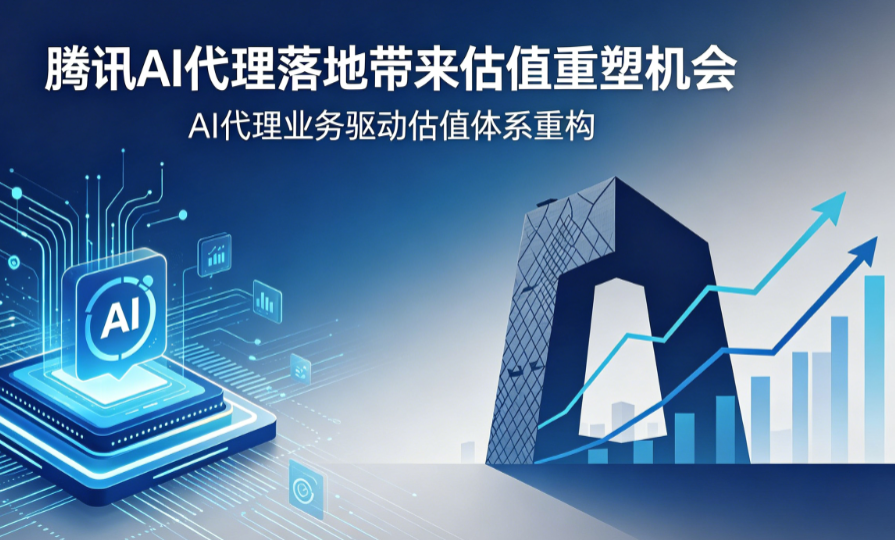
One of the key drivers of the TECH Index rebound was Hong Kong's 'stock king' Tencent (00700). In just a few trading days in June, Tencent's stock price rose significantly (highest about +13.48%). Apart from the overall recovery of platform economy stocks, the market is abuzz that Tencent is conducting internal testing of a prototype for 'WeChat AI assistant/AI agent,' which could officially launch as soon as this month.
According to market expectations, the AI agent will automatically connect over 4 million mini-programs under WeChat with a single command, achieving a seamless full-chain operation from 'finding merchants' to 'precise ordering.' Its strategic value lies in advancing China's AI story from 'model technology R&D' to the 'commercialization harvest period': WeChat has about 1.4 billion users and a strong application ecosystem. If the AI agent is successfully introduced, it could form a profit path from 'activating massive traffic' to 'binding customers.'
Unlike the US AI narrative led by semiconductor hardware, China's AI core moat leans more toward 'application scenarios and user base.' The article believes Tencent has a leading advantage in ecosystem and user scale in this track.
However, the market remains divided on its implementation and profit model. Citi and CLSA are relatively optimistic, believing WeChat's user ecosystem is hard to replicate with at least 10 years of competitive barriers, and the launch of the AI agent this year is 'more certain'; such advanced expectations may help open space for stock price valuation reassessment. In contrast, Goldman Sachs cautions that the evolution and profit model of the AI agent may remain superficial, suggesting the market's recognition of Tencent management's long-term AI strategy is still not fully established.
From a stock performance perspective, bears seem to have the upper hand. As of 2026, Tencent has significantly underperformed comparable internet platforms in the US, Japan, South Korea, and Taiwan, while the HSI has been relatively flat during the same period; Tencent has fallen about 15% cumulatively. The article cites EJFQ system data: Tencent's latest forward PE ratio is about 12.77 times, 0.4 standard deviations below its historical median, reflecting that investors still primarily price traditional tech companies from a 'platform economy' perspective, potentially undervaluing its AI potential.
In addition, the article notes that the derivatives market has shown earlier buy signals: Tencent's total call option open interest has recently risen sharply, hitting a record high of about 1.615 million contracts. The author infers that funds may have been 'building positions/ambushing' at low levels. Once the WeChat AI agent launches successfully and dispels doubts, option positions could trigger a 'squeeze/short covering' move, leading to large-scale valuation reshaping.
Conclusion: The article believes that 'smart money' may have already positioned in advance, and given the low valuation level, if the domestic AI center accelerates full implementation, Tencent could become the biggest beneficiary of the application wave, warranting close attention.