Hang Seng Index: Barometer of the Hong Kong Stock Market
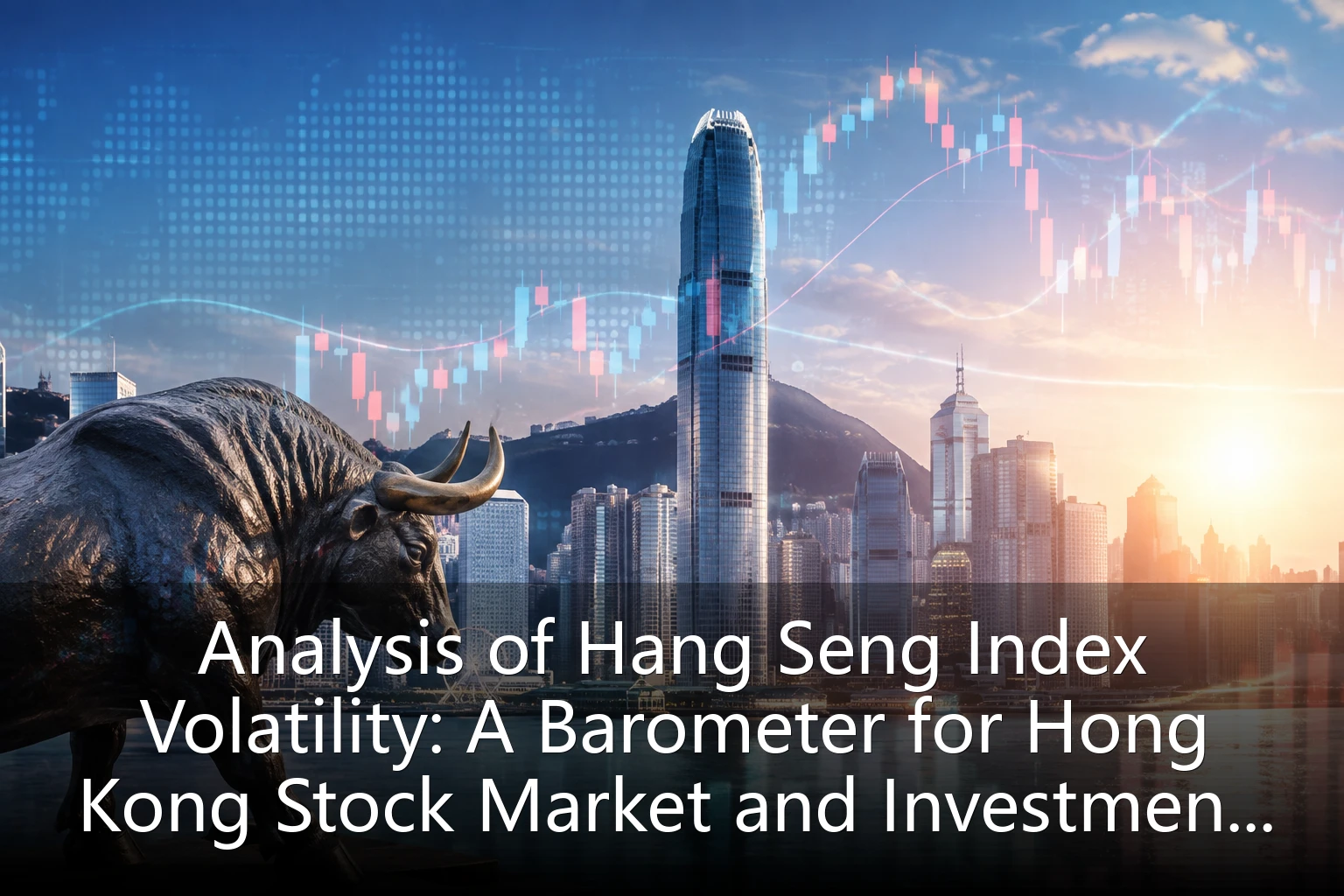
As the most representative market benchmark for Hong Kong's stock market, the Hang Seng Index has long been regarded as a key indicator measuring the overall performance of Hong Kong stocks. Since its establishment in 1969, the index has weathered numerous market cycles, becoming an important window for global investors to observe the health of Hong Kong's economy and financial markets. Compiled by the Hong Kong Stock Exchange, the Hang Seng Index includes the 50 largest and most liquid listed companies on the exchange, accounting for about 60% of the total market capitalization, and its fluctuations often signal the direction of the overall Hong Kong stock market.
Composition Characteristics of the Hang Seng Index
The constituent stocks of the Hang Seng Index have distinct industry distribution characteristics, with finance, real estate, technology, and consumer sectors dominating. This structure reflects Hong Kong's nature as an international financial center while making the index sensitive to fluctuations in specific industries. In recent years, with the addition of new economy companies, the composition of the Hang Seng Index has gradually diversified, and the weight of the technology sector has continuously increased, injecting new vitality into the index and changing its traditional volatility patterns.
Key Driving Factors Affecting the Hang Seng Index
The volatility of the Hang Seng Index is influenced by multiple factors, including both macroeconomic forces and short-term changes in market sentiment and capital flows. Understanding these driving factors is crucial for grasping market trends.
Impact of Macroeconomic Environment
As an open economy, Hong Kong's stock market performance is closely related to the global macroeconomic environment. Factors such as China's economic growth trend, US monetary policy direction, and changes in international trade relations affect the Hang Seng Index through different channels. Especially mainland economic data, such as GDP growth rate, PMI index, and industrial added value, often become market focus points because mainland enterprises account for a significant proportion of Hang Seng Index constituent stocks.
Dual Impact of Policy Factors
The impact of policy factors on the Hang Seng Index cannot be ignored. On one hand, Hong Kong's local policies, such as adjustments to fiscal budgets, monetary policies, and regulatory frameworks, directly affect market expectations. On the other hand, changes in mainland policies, especially those related to the connectivity mechanisms between mainland and Hong Kong markets, also affect index performance by changing capital flows and market sentiment. For example, strengthened regulatory oversight of specific industries in the mainland often leads to significant fluctuations in related Hang Seng Index constituent stocks.
International Geopolitical Risks
As an international financial center, Hong Kong's market is vulnerable to the impact of global geopolitical events. Changes in China-US relations, regional conflicts, international sanctions, and other factors may trigger market risk aversion, leading to capital outflows and subsequently dragging down the Hang Seng Index's performance. Such risks are often difficult to predict but tend to have a relatively severe impact on the market.
Transmission Logic Between Hang Seng Index and Individual Stock Prices
As an indicator of overall market performance, there is a complex transmission mechanism between the Hang Seng Index's fluctuations and individual stock prices. Understanding this transmission relationship helps investors better grasp market opportunities and risks.
Interactive Relationship Between Index and Constituent Stocks
The changes in the Hang Seng Index mainly stem from the price changes of its constituent stocks, with the fluctuations of heavyweight stocks having a more significant impact on the index. For example, the stock price movements of large constituent stocks such as HSBC Holdings and Tencent Holdings often dominate the index's trend in the short term. Meanwhile, changes in the index can in turn affect the pricing of constituent stocks, especially in cases of extreme market sentiment, where this interactive relationship may be amplified.
Rotation Effect of Industry Sectors
The industry distribution characteristics of the Hang Seng Index make the rotation of different sectors an important factor affecting the index's performance. When market risk appetite rises, growth-oriented sectors such as technology and consumer often perform strongly; while when risk aversion sentiment increases, defensive sectors such as finance and utilities may be relatively resilient. This industry rotation not only affects the overall performance of the index but also provides investors with opportunities to adjust allocations in different market environments.
Indicative Role of Capital Flows
Changes in the flow of northbound and southbound capital are important factors affecting the Hang Seng Index. Northbound capital flowing into Hong Kong stocks through Shanghai-Hong Kong Stock Connect and Shenzhen-Hong Kong Stock Connect is usually regarded as a reflection of overseas investors' confidence in the Hong Kong market; while southbound capital reflects mainland investors' attitude toward the Hong Kong market. These changes in capital flows often lead the index's movements, providing investors with important forward-looking signals.
Future Scenario Analysis of the Hang Seng Index
Looking ahead, the Hang Seng Index may face multiple scenarios, each corresponding to different investment opportunities and challenges.
Scenario 1: Economic Recovery-Driven Rally
If the global economy, especially China's economy, can achieve a steady recovery with continuous improvement in corporate profits, the Hang Seng Index is expected to experience a fundamentals-driven rally. In this scenario, cyclical industries such as finance, industrial, and energy may perform prominently, and leading companies in the index's constituent stocks are expected to achieve excess returns. However, investors also need to pay attention to the risk of central bank policy tightening that may arise from rising inflationary pressures, which could suppress market valuations.
Scenario 2: Structural Opportunities Under Policy Stimulus
In the face of pressure from slowing economic growth, policymakers may introduce a series of stimulus measures. In this scenario, sectors closely related to policies such as technology, new energy, and healthcare may perform strongly. Relevant constituent stocks in the Hang Seng Index are expected to experience valuation increases, driving the index upward. However, the effects of policy stimulus often have time lags and may be accompanied by increased market volatility, requiring investors to remain cautious.
Scenario 3: Market Adjustment Under External Shocks
External shocks such as escalating global geopolitical tensions, tighter-than-expected monetary policy in major economies, or major financial crises may lead to significant adjustments in the Hang Seng Index. In this scenario, defensive sectors such as utilities and consumer staples may be relatively resilient, while high-growth stocks with high valuations may face significant adjustment pressure. Investors should closely monitor market signals and promptly adjust their portfolios to control risks.
Risks and Opportunities of Investing in Hang Seng Index-Related Products
For investors, the Hang Seng Index offers opportunities to participate in the Hong Kong stock market while also bringing corresponding risks. How to seize opportunities and control risks is key to investment decisions.
Advantages and Limitations of Index Investing
Index investing through Hang Seng Index ETFs and other products offers advantages such as risk diversification, low costs, and simple operations, making it suitable for long-term investors and entry-level investors. However, index investing also has limitations, such as being unable to completely avoid systematic market risks and potentially underperforming actively managed products in structural market conditions. Investors should reasonably choose investment methods based on their own risk tolerance and investment objectives.
Importance of Valuation Analysis
The valuation level of the Hang Seng Index is an important reference for investment decisions. By comparing indicators such as price-to-earnings ratio, price-to-book ratio, and dividend yield with historical levels and major global markets, it can be determined whether the index is currently in a reasonable valuation range. Gradually building positions when valuations are low and appropriately reducing positions when valuations are too high is an effective strategy for controlling risks and increasing returns. However, valuation indicators are not absolute buy or sell signals, and investors need to make comprehensive judgments in combination with macroeconomic environment, market sentiment, and other factors.
Core Principles of Risk Management
When investing in Hang Seng Index-related products, risk management is crucial. Investors should follow the principle of diversification to avoid excessive concentration in a single industry or stock; set reasonable stop-loss points to control the maximum loss of a single investment; maintain an appropriate cash position to respond to market fluctuations and seize investment opportunities. In addition, regularly reviewing the portfolio and adjusting strategies in a timely manner according to market changes is also an important part of risk management.
Conclusion and Investment Recommendations
As an important indicator of the Hong Kong stock market, the Hang Seng Index's volatility is influenced by multiple factors, including macroeconomic environment, policy changes, and geopolitical risks. Understanding these driving factors and transmission logic helps investors better grasp market opportunities. Looking ahead, the Hang Seng Index may face multiple scenarios, and investors should formulate appropriate investment strategies based on their own risk tolerance and investment objectives.
For ordinary investors, participating in the Hong Kong stock market through Hang Seng Index ETFs and other products is a simple and effective investment method. However, during the investment process, it is still necessary to pay attention to valuation levels, control risks, and regularly review the investment portfolio. Against the backdrop of profound changes in the global economic landscape, the Hang Seng Index will continue to play its role as a barometer of the Hong Kong stock market, providing important reference for investors.