Hang Seng Index Rises in September: Tech Stocks Lead Market Recovery, Northbound Flows Hit New High
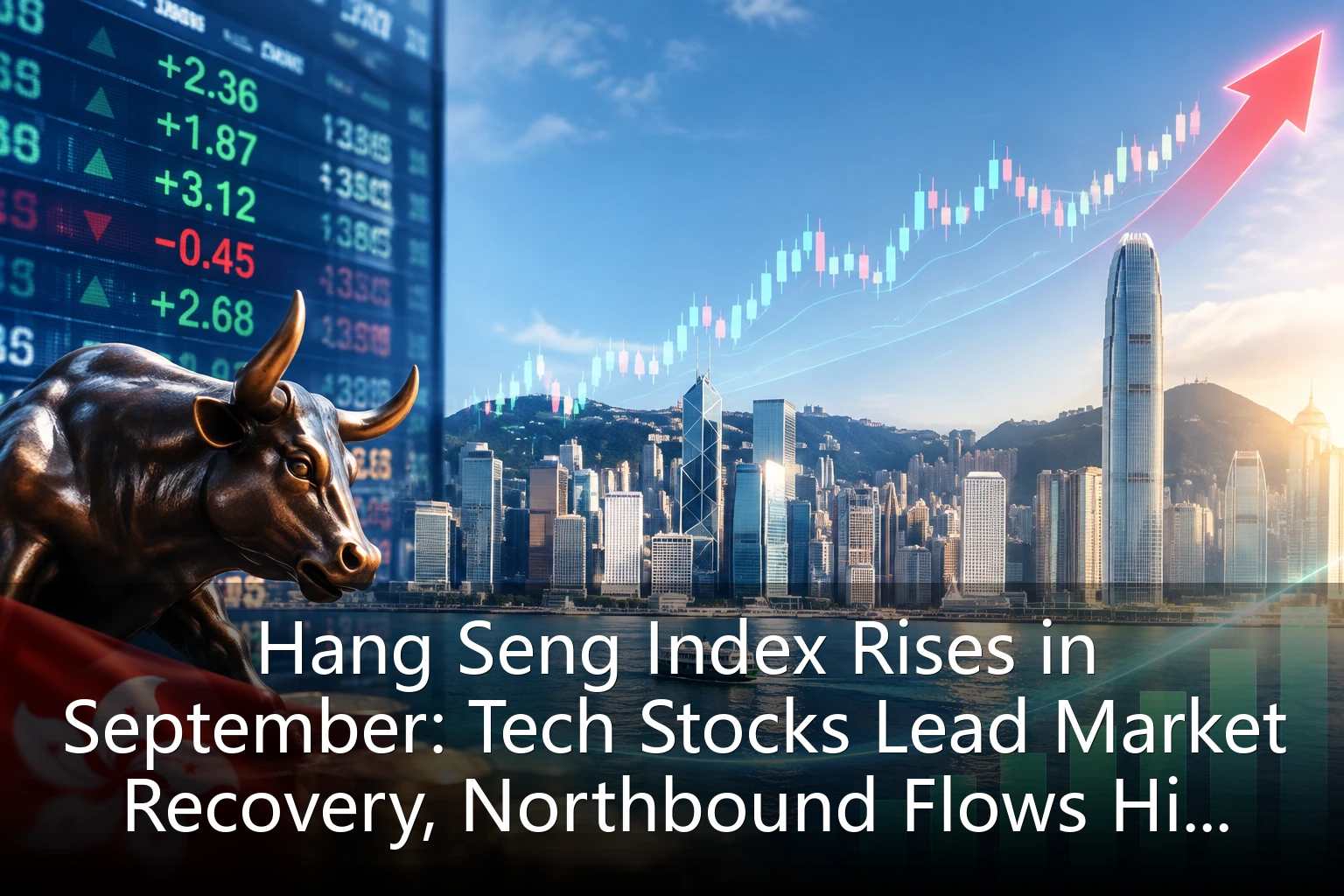
On September 18, 2026, after experiencing previous volatility adjustments, Hong Kong's stock market showed an upward trend with the Hang Seng Index. Tech stocks became the main force leading the market recovery. Meanwhile, Southbound capital continued to flow in, with weekly net inflows reaching a new high for the year, highlighting the market's recognition of Hong Kong stocks' allocation value.
Market Overview: Hang Seng Stabilizes Above 24,000 Points
As of the close on September 18, the Hang Seng Index stood at 24,235.68 points, up 0.82%, with a trading volume of 87.65 billion Hong Kong dollars. Market sentiment was generally positive, boosted by strong tech stocks and continued inflows of mainland capital. Since September, the Hang Seng Index has accumulated a 3.2% increase, outperforming other major stock markets in the Asia-Pacific region.
In terms of sector performance, tech stocks led the Hang Seng Index, with the Hang Seng Tech Index rising 1.56%. Internet platforms, semiconductors, and new energy vehicle sectors performed particularly well. Meanwhile, financial and real estate stocks performed relatively weakly, falling slightly by 0.3% and 0.8% respectively, reflecting the differentiation in market risk appetite.
Capital Flows: Southbound Flows Hit New High
Notably, Southbound capital has continued to increase its position in Hong Kong stocks since September, with weekly net inflows exceeding 15 billion Hong Kong dollars, a new high for the year. Data shows that since September, cumulative net inflows of Southbound capital have exceeded 38 billion Hong Kong dollars, with an average daily net inflow of about 6.3 billion Hong Kong dollars, an increase of about 25% compared to the daily level in August.
In terms of capital allocation direction, Southbound capital mainly flowed into tech stocks and high-dividend sectors. Among them, internet giants such as Tencent Holdings (00700.HK), Alibaba (09988.HK), and Meituan (03690.HK) received capital favor, while high-dividend energy stocks such as China National Offshore Oil (00883.HK) and China Shenhua (01088.HK) were also sought after by capital.
Analysts pointed out that the continuous inflow of Southbound capital is mainly based on three factors: first, Hong Kong stock valuations are still at relatively low levels compared to other global markets; second, the expectation of mainland economic recovery has strengthened, improving the profit prospects of related enterprises; third, the continuous advancement of Hong Kong's financial market reform has enhanced market attractiveness and liquidity.
Tech Stocks Lead the Market: AI and New Energy Drive Growth
In the tech stock sector, artificial intelligence and new energy-related stocks performed particularly well. With the accelerated development of the global AI industry, AI concept stocks in Hong Kong's market, such as SenseTime (0020.HK) and Tencent Literature (00772.HK), have seen continuous stock price increases recently, with some individual stocks rising more than 20% within the month.
In terms of new energy vehicles, as the global electric vehicle penetration rate continues to increase, supply chain enterprises in Hong Kong's market such as BYD Electronics (00285.HK) and Sunny Optical (02382.HK) have shown continuous good performance, and their stock prices have risen accordingly. In addition, with the growth of mainland new energy vehicle exports, related companies such as XPeng Motors (09868.HK) have also attracted market attention.
It's worth noting that the rise in tech stocks is not comprehensive but shows structural differentiation. Large tech platform companies have received more capital favor due to their stable profitability and market position; while some small tech stocks with unclear profit models have performed relatively weakly, reflecting the market's greater emphasis on corporate fundamentals and profitability.
High-Dividend Sectors: Defensive Allocation Favored
In a volatile market environment, high-dividend sectors have become a safe haven for capital. Data shows that the Hang Seng High Dividend Index has risen 1.2% since September, outperforming the overall Hang Seng Index. Among them, energy, telecommunications, and utilities sectors performed particularly well.
Taking the energy sector as an example, stocks such as China National Offshore Oil (00883.HK) and Kunlun Energy (00135.HK) have seen continuous stock price increases recently while maintaining relatively high dividend rates. Analysts pointed out that in the context of global economic growth slowdown and rising inflationary pressures, high-dividend stocks can provide stable cash flow returns, becoming the first choice for investors' defensive allocation.
In the telecommunications sector, operators such as China Mobile (00941.HK) and China Unicom (00762.HK) have attracted the attention of long-term capital with their stable cash flows and high dividend rates. In addition, with the continuous advancement of 5G construction, the long-term growth of related companies has also been recognized by the market.
Market Outlook: Allocation Window Remains Open
Looking ahead, most institutions believe that the Hong Kong stock market still has good allocation value. On one hand, Hong Kong stock valuations are still at relatively low levels globally, with a high safety margin; on the other hand, with the strengthening expectation of mainland economic recovery, the fundamentals of the Hong Kong stock market are expected to continue to improve.
In terms of capital flows, the continuous inflow of Southbound capital provides strong support for the Hong Kong stock market. Analysts pointed out that as mainland investors' understanding of the Hong Kong stock market deepens and the interconnection mechanism between the two markets continues to improve, Southbound capital is expected to maintain a net inflow trend, bringing incremental funds to the Hong Kong stock market.
In terms of sector allocation, tech stocks and high-dividend sectors are expected to become the main drivers of the market. In terms of tech stocks, benefiting from the accelerated development of the global AI industry, related companies are expected to see performance growth; high-dividend sectors are expected to continue to play a defensive allocation role in a volatile market environment.
Investment Strategy: Seizing Structural Opportunities
For investors, in the current market environment, a more balanced investment strategy should be adopted, focusing on both the opportunities of tech growth stocks and the defensive value of high-dividend stocks. Specifically, attention can be paid to the following directions:
- AI industry chain related companies: including leading enterprises in AI chips, AI applications, and AI services;
- New energy vehicle industry chain: supply chain companies benefiting from the increase in global electric vehicle penetration;
- High-dividend energy stocks: energy companies with stable cash flows and high dividend rates;
- Telecom operators: benefiting from the advancement of 5G construction and stable dividend returns;
In addition, investors should also pay attention to policy changes and geopolitical risks in the Hong Kong stock market, and adjust their investment portfolios in a timely manner. In terms of operations, it is recommended that investors adopt a strategy of building positions in batches to avoid investing too much capital at once, thereby reducing the risks brought by market fluctuations.
Risk Warnings
Although the Hong Kong stock market has performed relatively positively recently, the following risk factors still need attention: first, the slowdown in global economic growth may put pressure on corporate profits; second, the uncertainty in Sino-US relations may affect market sentiment; third, the adjustment of Hong Kong's local real estate market may affect related companies. While investors seize market opportunities, they should also do a good job in risk management.
In summary, the Hang Seng Index showed an upward trend in September, with tech stocks leading the market recovery and Southbound capital continuing to flow in at a new high, highlighting the market's recognition of Hong Kong stocks' allocation value. In the current environment, investors can seize the structural opportunities in tech growth stocks and high-dividend stocks, while paying attention to market risks and doing a good job in asset allocation.