Southbound funds hit new high for the year: How to seize the HK stock allocation window?
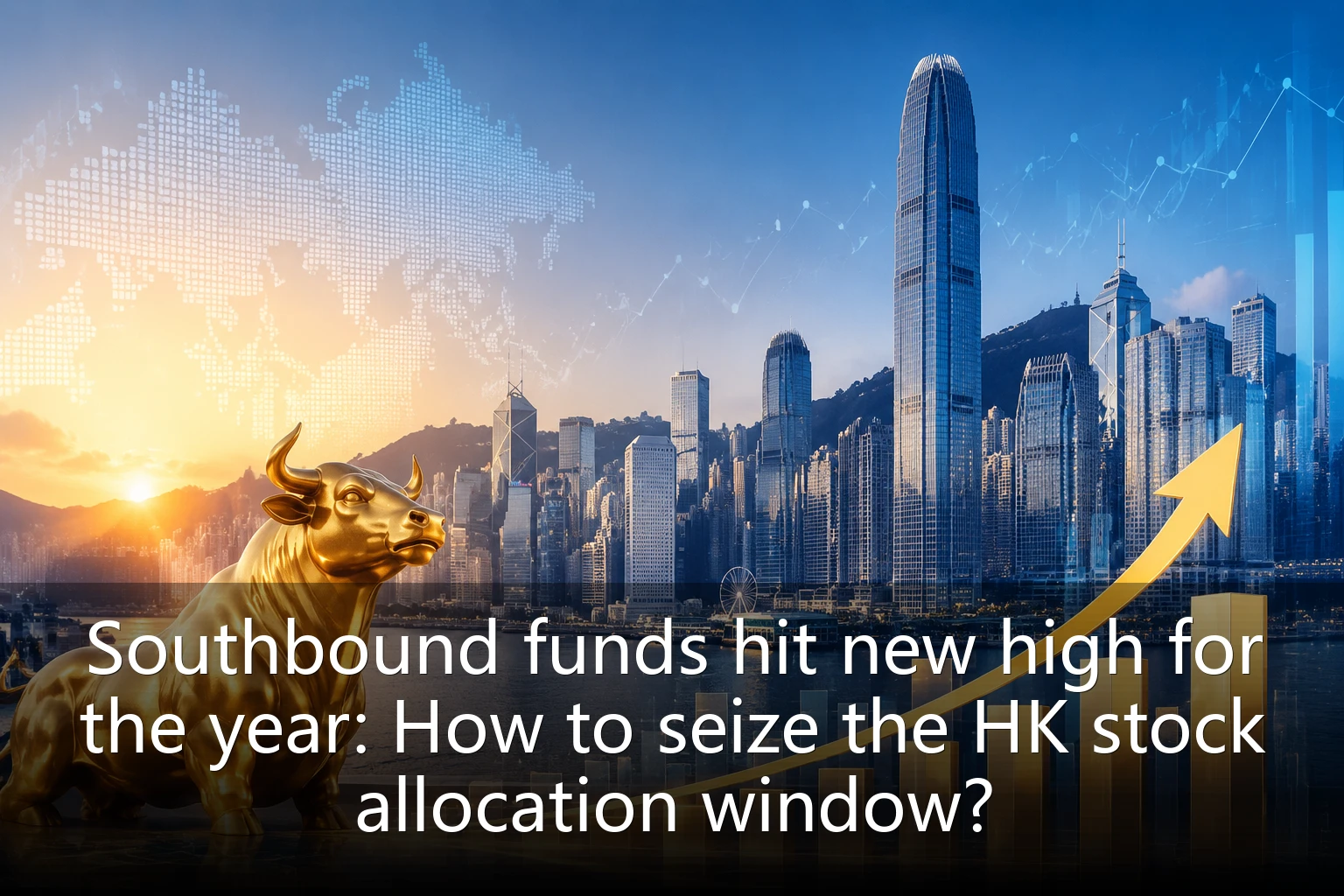
On August 14, 2026, the Hong Kong stock market once again became the focus of global investors. As southbound funds continued to pour in, the HK stock market demonstrated strong allocation appeal. Data shows that the net inflow of southbound funds in August hit a new high for the year, reaching a historic level. This phenomenon not only reflects mainland investors' recognition of the value of the HK stock market but also signals the arrival of the HK stock allocation window.
Southbound funds continue to increase allocation, hitting new high for the year
According to the latest data, the net inflow of southbound funds in August exceeded 30 billion HKD, hitting a new high for the year. This figure not only surpassed the 80 billion HKD in July but also reached the highest single-month net inflow since 2023. Analysts point out that the continuous inflow of southbound funds is mainly due to the low valuation advantage of the HK stock market and mainland investors' demand for global asset allocation.
In terms of capital flow, tech stocks and high-dividend sectors have become the main allocation targets for southbound funds. Among them, tech stocks account for 45%, high-dividend sectors account for about 30%, and the remaining funds are distributed across sectors such as finance and consumption. This allocation structure reflects the current market's investment strategy that emphasizes both growth and value.
Low valuation and high dividends become the core logic for allocation
The HK stock market has long attracted global investors with its low valuation and high dividends. Currently, the P/E ratio of the Hang Seng Index is about 9 times, far below the historical average, while the dividend yield remains above 4%, one of the highest among major global markets. This value洼地 effect makes the HK stock market an important choice for global capital allocation.
Specifically, the valuation advantage of the tech stock sector is particularly obvious. Taking Tencent Holdings as an example, its P/E ratio is only 15 times, far lower than the valuation of over 30 times for its US peers. At the same time, Tencent's dividend yield also remains above 2%, providing investors with stable cash flow returns. This combination of low valuation and high dividends is the core driver for the continuous inflow of southbound funds.
Tech and high dividends drive in tandem
In the current market environment, tech stocks and high-dividend sectors have become the two main lines of allocation for southbound funds. In terms of tech stocks, with the development of emerging technologies such as artificial intelligence and cloud computing, the growth potential of tech companies has attracted much attention. The high-dividend sector, on the other hand, provides a stable source of returns, suitable for investors with lower risk appetite.
In terms of industry distribution, tech stocks are mainly concentrated in the internet, semiconductor, and new energy sectors. Among them, internet giants such as Tencent and Alibaba remain the focus of capital allocation. At the same time, the semiconductor and new energy sectors have also received favor from funds, reflecting the market's expectations for technological industry upgrading.
The high-dividend sector is mainly concentrated in the finance, utilities, and real estate sectors. These industries usually have stable cash flow and high dividend payment capabilities, suitable for long-term investors. Especially in the current interest rate environment, the value of high-dividend assets is more prominent.
Global capital returns, HK stock allocation value stands out
In addition to southbound funds, global capital is also accelerating its flow into the HK stock market. As expectations of the Federal Reserve's interest rate cuts rise, global capital begins to re-evaluate the risk-return ratios of various assets. As one of the lowest-valued major markets globally, the HK stock market naturally becomes a key focus for capital allocation.
Data shows that global asset management giants such as BlackRock and Vanguard are increasing their allocation to HK stocks. The actions of these institutions further strengthen the allocation value of HK stocks and also provide a good market environment for southbound funds.
How to seize the allocation window?
Facing the opportunity of continuous inflow of southbound funds, how should investors seize the allocation window? Experts suggest that investors should adopt a diversified allocation strategy while paying attention to industry rotation and individual stock selection.
First, investors should maintain diversified allocation and avoid over-concentration. Although tech stocks and high-dividend sectors are current hotspots, other sectors such as consumption and healthcare also have investment value. Through diversified allocation, risks can be effectively diversified, and the stability of the investment portfolio can be improved.
Second, investors should pay attention to industry rotation. As the market environment changes, the performance of different sectors may vary. Investors should closely monitor industry dynamics and adjust their allocation structure in a timely manner. For example, after the valuation of tech stocks rises, they can consider increasing the allocation to high-dividend sectors.
Finally, investors should focus on individual stock selection. Within the industry, the performance of different companies may vary greatly. Investors should select individual stocks with competitive advantages, good fundamentals, and reasonable valuations for allocation. At the same time, they should also pay attention to the company's dividend policy and growth potential.
Risk warnings and investment advice
Although the HK stock market has obvious allocation value, investors still need to pay attention to related risks. First, the uncertainty of the global economic environment may affect the performance of HK stocks. Second, policy differences between the mainland and Hong Kong markets may also bring risks. In addition, factors such as exchange rate fluctuations and liquidity risks are also considerations for investors.
For ordinary investors, it is recommended to use tools such as ETFs for allocation to reduce the risk of individual stock selection. At the same time, a long-term investment perspective should be maintained to avoid the impact of short-term market fluctuations. In terms of allocation proportion, HK stock allocation can be appropriately increased according to one's own risk tolerance, but over-concentration should be avoided.
Overall, the continuous inflow of southbound funds has brought new opportunities to the HK stock market. Supported by low valuation and high dividends, the HK stock allocation window has arrived. Investors should seize this opportunity and obtain long-term stable investment returns through reasonable allocation strategies.